
Quick answer: Yes, most local businesses still need a website, even with a strong Google Business Profile. The profile is where people find you on Google Maps, and you should keep it complete. But Google can change it, remove posts from it and switch off features inside it, and Google’s own help pages say it may check suggested edits to your profile against other public information, such as your website. A small website is the one place online where you decide what is true about your business.
Below is what a Google Business Profile does well, what it changed recently, where a website still matters, a table of recent changes taken from Google’s own help pages, and the small setup we recommend for a local shop.
Do you need a website if you have a Google Business Profile?
If you only take walk-ins and the phone already rings all day, you can get by on the profile for a while. For almost everyone else, the answer is yes, and the reason is control, not looks.
Your Google Business Profile is a listing that Google hosts and Google runs. You fill it in, but you do not own it. A website on your own domain is the opposite: nobody edits it except you or the person you pay. The two do different jobs. The profile gets you found nearby. The website answers the questions that decide whether someone calls you or the shop down the road.
Our honest view: think of the profile as your storefront sign on Google, and the website as the counter where you actually talk to the customer. You want both, and they should say exactly the same thing.
What does a Google Business Profile do well?
A lot, and it is free. It puts you on Google Maps and in the local results, shows your hours, phone number, photos and reviews, and gives people a call button and directions in one tap. For a mechanic, a plumber or a salon, many first contacts start there.
Google’s help page on local ranking says local results are mainly based on three things: relevance (how well your profile matches the search), distance (how far you are from the person searching) and how well known your business is. For that last one, Google names how many websites link to your business and how many reviews you have. A complete, accurate profile helps with the first factor. Reviews and links help with the third.
So do not neglect the profile. Fill in every field, pick the right category, add real photos and answer reviews.

The profile is often the first thing a local customer sees. Keep it complete and current.
What has Google changed on Business Profiles recently?
This is where the “profile only” plan gets risky. Google keeps changing what the profile does and who can edit it, and the business owner usually finds out afterwards. A few examples, all from Google’s own help pages or reported changes:
| Change | When | What it means for you |
|---|---|---|
| Websites made with Business Profiles (business.site) switched off | March 2024, with a redirect to the profile until June 10, 2024 | Businesses that used the free Google site lost it. After the redirect ended, visitors got a “page not found” error. |
| Chat and call history removed from Business Profiles | July 31, 2024 | Conversations with customers inside the profile stopped. Past records could only be downloaded until August 30, 2024. |
| Suggested edits from users: owners get 4 days to accept or reject | Current help page | If you miss the window, Google may publish the change when it is supported by other public information, such as your website. |
| Posts with unverified contact details may be removed | Current help page | Phone numbers, email addresses or social handles typed into a post can get it taken down. Google points you to the “Call now” button instead. |
None of these changes are bad on purpose. Google is fighting spam and fake listings, and that is a real problem. But every row is a decision made for you. The third row matters most: when someone suggests a wrong phone number or wrong hours, Google says it may look at your website to decide what is true. No website means one less source backing you up.
What does a website do that the profile cannot?
Here is the practical list, from what we see working with small businesses:
- It explains your services properly. A profile gives you a short description and a list. A website can have a page for brake repair, one for diagnostics and one for fleet work, each answering the questions people actually ask.
- It shows proof. Before and after photos, the warranty you offer, how long jobs take, what brands you work on. The things that make someone trust a stranger with their car or their house.
- It shows up in normal Google results, not only in Maps. Searches like “how much is a timing belt replacement” or “do you fix hybrids” are answered by pages, not by listings.
- It gives AI search tools something to read. When people ask an AI assistant to recommend a local shop, those tools pull from pages on the web. A profile with three lines of text gives them very little.
- It is the place your ads, your social posts and your printed cards can point to, and it stays there if a platform changes the rules.
- It collects quote requests and bookings in your own inbox, on your own terms.
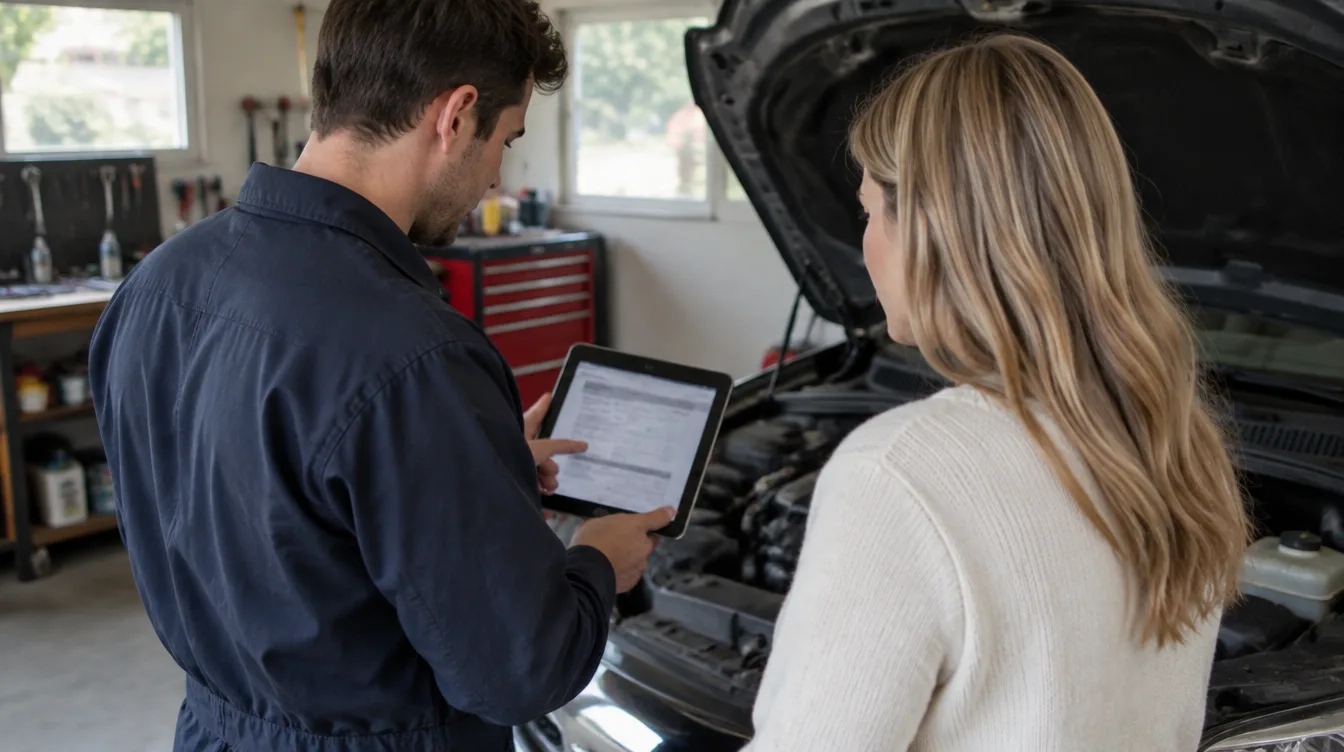
The questions a customer asks at the counter are the same ones a good website should answer.
Website or Google Business Profile: which should a small business do first?
The profile, because it is free and can be done in an afternoon. Verify it, fill in every field, add real photos of the place and the work, and ask your last few happy customers for a review.
Then build a small website within the next few weeks, not “one day”. It does not need to be big. For most local service businesses five pages is enough: home, services, your work, about, contact. We wrote about the pages a small business website actually needs if you want the detail.
Once both exist, link them. Put the website address in the profile, and put your address, phone number and a map on the website. The name, address and phone number should match character for character.
Mistakes we see when the profile and the website do not match
- Different hours. The profile says you close at 6, the website says 5:30. Customers notice, and it gives Google two different answers about you.
- Old phone numbers. A number from three years ago still sitting in the website footer is exactly the kind of thing that can back up a wrong suggested edit.
- Linking the profile to a Facebook page. It works, but you are sending people from one rented platform to another.
- A website that hides the phone number. On a phone, the number should be one tap away at the top of every page.
- Ignoring the 4 day email. When Google tells you someone suggested an edit, open it the same day.
Same name, same phone, same hours, everywhere. It sounds boring and it matters.
A short checklist for both
- Profile verified, correct main category, every field filled in.
- Real photos of the place, the team and the work. No stock images.
- Website address added to the profile, and it opens on a phone in a few seconds.
- Name, address, phone and hours identical on the profile and the website.
- One page per main service on the website.
- Click to call and a simple contact form on the website.
- Someone checks profile notifications every week, including suggested edits.
- Reviews answered, good and bad, within a few days.
Questions people ask
Can I rank on Google Maps without a website?
Yes, it is possible. Google’s own ranking factors for local results are relevance, distance and how well known the business is, and a website is not listed as a requirement. But links from other websites count toward that last factor, and a website gives other sites something to link to.
Does Google still offer free websites with a Business Profile?
No. Google switched off websites made with Business Profiles in March 2024 and the temporary redirect ended on June 10, 2024. If you still have a business.site address printed anywhere, replace it.
Is a Facebook page enough instead of a website?
It is better than nothing, but it has the same problem as the profile: someone else owns the rules. We covered this in why customers still ask for your website when social is working.
How much does a basic website cost?
It varies a lot by who builds it and what is included. We broke down the real ranges in how much a small business website costs. Our own prices are on the pricing page.
What happens if a customer suggests a wrong edit to my profile?
According to Google’s help page, you get notified about some suggestions and have 4 days to accept or reject them. If you do not respond, Google may publish the change when other public information, such as your website, supports it. Google can also apply some edits without review for policy reasons.
Do I need a big website for local SEO?
No. A small site with one clear page per service, real photos and matching contact details is a solid start. Size matters less than being accurate and useful.
Where to start
This week, open your Google Business Profile, check that every field is correct and that the website field points somewhere you control. If there is nothing to point to, that is your next job. If you run an independent auto repair shop in the US, we build a five page site made for repair shops and you see a free preview before you pay anything. For other businesses, see how we build websites and online stores for small firms.
Sources: Google: Tips to improve your local ranking, Google: Edit your Business Profile, Google: About posts on Business Profiles, Google: Chat and call history discontinued, TechRadar: Google is shutting down websites made with Business Profiles.