
Quick answer: a small business website costs anywhere from about £2 a month (a DIY website builder) to £10,000 or more (a bespoke build), and almost nobody tells you which end applies to you. For a basic business site, the sources below put a freelancer at £300 to £1,000, and our own 5 page site is €1,200 once or €57 a month. On top of the build there is a yearly bill for the domain, hosting and security. The number on the quote is only half of what you pay. The other half is what is left out of it.
Below is why the prices are so far apart, what each route actually costs, what is usually missing from a quote, and how to compare two offers fairly.
Why do website prices range from £2 a month to £10,000?
Because the quotes are not for the same thing. Startups.co.uk, one of the pages that currently ranks for this question, puts website builder plans at £1.99 to £259 a month, a web designer for a basic site at around £300 to £1,000, and a custom or bespoke site at £10,000 or more. A small web agency, it says, charges £50 to £150 an hour.
Those are four different ways of buying a website. In one you do the work yourself. In another a person does it for you once. In the third a team builds something from scratch. Putting them in one list and calling it “the cost of a website” is what makes the answer look like a guess.

Add up the first two years, not just the build.
What does each route actually cost?
Here is how the four routes compare. The cost column uses the figures quoted by Startups.co.uk, so check them against current prices before you budget. The last column is the part that is easy to miss.
| Route | Typical cost (as reported) | Who does the work | What to watch |
|---|---|---|---|
| Website builder | £1.99 to £259 a month | You | Cheap in money, expensive in hours. Photos, wording and setup are all yours |
| Freelance web designer | £300 to £1,000 for a basic site | One person | Ask what happens after launch: hosting, updates, changes |
| Small web agency | £50 to £150 an hour | A team | The hourly rate is not the total. Ask for a fixed price in writing |
| Bespoke build | £10,000 or more | An agency or developer | Makes sense for complex needs. Check you actually need it |
Our own prices are public. A 5 page website is €57 a month with hosting, domain and small changes included, or €1,200 once if you would rather own it from day one. A 10 page business website is €87 a month or €1,800 once, and an online store is €107 a month or €2,200 once. The full list is on the pricing page, and no price changes after a call.
What is usually missing from a website quote?
A quote tells you the price of the build. A website also has running costs, and these are the lines that get left off:
- The domain name. B12 puts renewals at roughly $10 to $130 a year, depending on the extension
- Security certificate (SSL). Around $8 to $60 a year by the same source. Many hosts include it
- Hosting. The range quoted is huge, from a couple of dollars a month for basic shared hosting to hundreds for large sites. A small site on shared hosting is at the cheap end
- Updates and security. A site that is never updated can get slower, break or become a security risk. Somebody has to do it, and it is you or it is someone you pay
- Changes. A new price, a new photo, opening hours. Some providers charge for each one
- Content. Photos, text and a logo. If the quote says “content not included”, you are writing it yourself
The honest way to compare two offers is to ask each one for the total over two years, with every line above filled in or marked “not included”. If one of them cannot do that, you have learned something about the second year.
Is it cheaper to pay monthly or pay once?
On paper, paying once is cheaper. A 5 page site at €57 a month for 24 months is €1,368, against €1,200 once. But the €1,200 does not include hosting or later changes, and the €57 does. So the real question is whether you already have somewhere to host it and someone to make small edits.
If you do, buying once is the better deal. If you do not, monthly keeps the bill flat and the work off your desk, and there is no minimum term, so you can stop at the end of any month. We went through the numbers in full in pay monthly website vs one off payment.
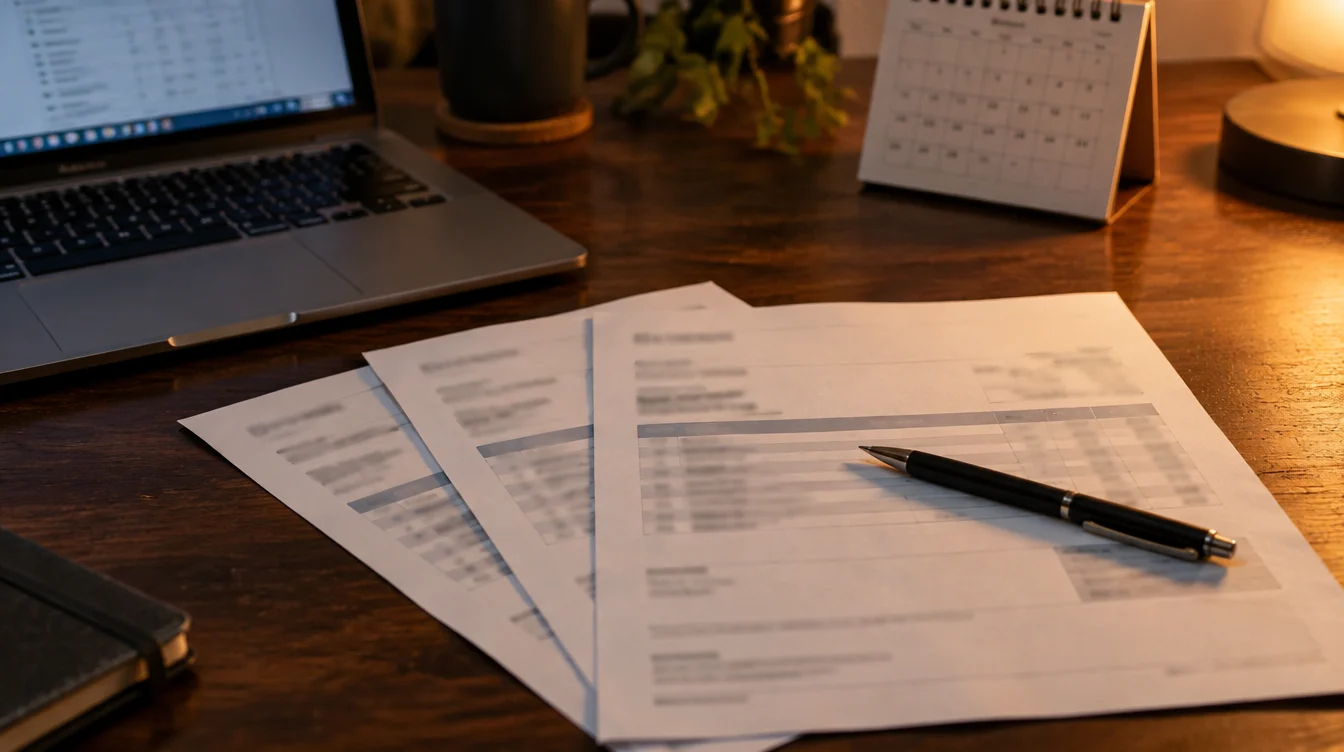
Hosting, domain and updates arrive as separate invoices unless someone bundles them.
Do you need a website at all?
Most small businesses already have one. A 2026 Network Solutions roundup of small business surveys reports that 83% of small businesses have a website, up from 64% in 2018, and that of the 17% without one, 34% say a website is not relevant to their industry. That is a vendor roundup, not a census, so treat the exact numbers as a rough picture.
The picture is still useful. If you are in the 17%, a customer who hears your name can still look you up before they call, and what they find, or do not find, shapes what happens next. A 5 page site with what you do, where you work, real photos and a form that reaches you is a solid start for a local trade. If you are not sure whether to start with one page or a full site, read landing page or website: what to build first.

A quote read on a phone, between jobs.
What a real small business site looks like
Alex is a plumber and heating engineer in Almelo in the Netherlands. His site has nine service pages, a separate page for each town he covers, a project gallery with photos of his real jobs, an FAQ, a Dutch and English toggle, and a contact form plus WhatsApp button that reach him straight away. He pays monthly, so hosting and small changes are covered. You can see the live site here.
It shows the point above: the size of the site followed what his customers search for, not what an agency could charge. Several towns meant several pages.
Four mistakes that cost the most
Comparing the build price and ignoring year two. The cheap quote with paid hosting, paid changes and a renewal fee can turn out the expensive one by month eighteen.
Not asking who owns it. If you stop paying, do you keep the site, the files and the domain? Get the answer in writing before you pay. We cover this in what to check before hiring someone to build your website.
Paying for pages you do not need. Ten thin pages are not better than five with real work and clear prices on them. Add pages when customers search for something you have no page for.
Launching with no photos. A site full of stock images looks like everyone else’s and proves nothing. Real photos of your own work are the cheapest upgrade there is.
Your checklist before you accept a quote
- The quote shows the total for the first two years, not just the build
- Domain, hosting and SSL are listed as included or not included
- It says how many small changes you get and what a bigger change costs
- It says who owns the site and the domain, and from when
- It says what happens if you stop, and what you can take with you
- You know who will answer your messages after launch
- You have seen at least one live site the provider built
- You have seen the site on a real link before you pay anything that cannot be refunded
Questions people ask
How much should a small business website cost?
For a basic site, the sources above quote £300 to £1,000 from a freelance designer. Our own 5 page site is €1,200 once, or €57 a month with hosting and small changes included. Bigger sites and shops cost more. Anyone who quotes a single number without asking what you sell is guessing.
Why are some quotes so much higher than others?
Different scope. An agency quote often includes strategy, custom design and project management. A freelancer quote may not. The way to compare is to put the same list of deliverables next to each price.
Can I build my own website for free?
You can start for very little with a website builder, and the cheapest plans are around £2 a month. The cost moves from money to time: choosing a template, writing the text, taking photos, testing it on a phone. For many owners that is where it stalls.
What are the ongoing costs of a website?
Domain renewal, hosting, a security certificate, updates and the time to change things. Ask any provider to list all five in writing, or to say which are included.
Is a monthly website plan a good idea?
If you want nothing to manage and a flat bill, yes. If you already have hosting and can edit text yourself, buying once is usually cheaper over two years. Check that there is no long minimum term either way.
How long does it take to build a small business website?
It depends on the provider, but most of the delay is usually waiting for the owner’s photos and text. Send those first and it moves faster. For Alex, the first draft was ready within 24 hours of us receiving his photos.
Where to start
Write down three things: what you sell, where your customers are, and the one action you want a visitor to take. That is the brief for any provider, including yourself.
If you sell products and need a checkout, the numbers change. We broke those down in what an online store really costs a small business, with a real month of card fees on Shopify and WooCommerce. And if you run an auto repair shop in the US, we build a five page website for a one time $497, with a free preview before you pay.
If you would rather have it built, the websites and online stores page sets out what each size includes, the pricing page has the costs, and the portfolio shows finished work. Once the site is live, the video ads and UGC content page covers sending people to it. You can also send us a message and we reply in writing, usually the same day. Everything is at giusmastery.com.
Sources: Startups.co.uk, how much does a website cost; B12, website maintenance costs in 2026; Network Solutions, small business website statistics. Our own prices are taken from our pricing page.


