
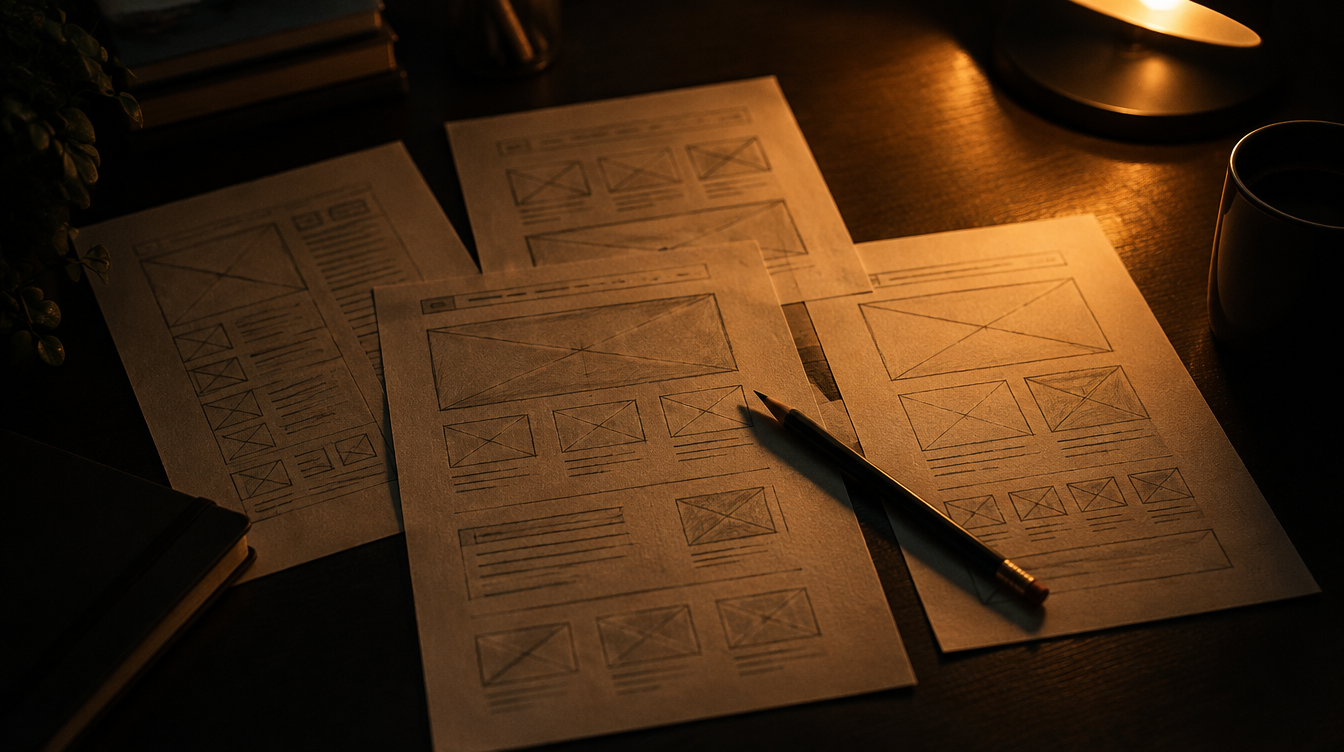
Quick answer: five pages will carry almost any small business: a home page, a page for what you sell, proof of your work, an about page with a face on it, and a contact page that actually reaches you. Everything else, the blog, the pricing page, the FAQ, the booking system, is worth adding once the first five are earning their keep. Most people build it the other way round and wonder why nothing happens.
Below is each page, what goes on it, the questions people ask about it, and the ones you can safely leave for later.
How many pages does a small business website need?
Five to seven for a service business. Eight to twelve once you sell several distinct things or want to be found for more than one search. A shop is different again, because the product pages are the site.
The number matters less than the order. A site with five finished pages beats a site with fifteen half written ones, every time, because a visitor only ever reads two or three before deciding.
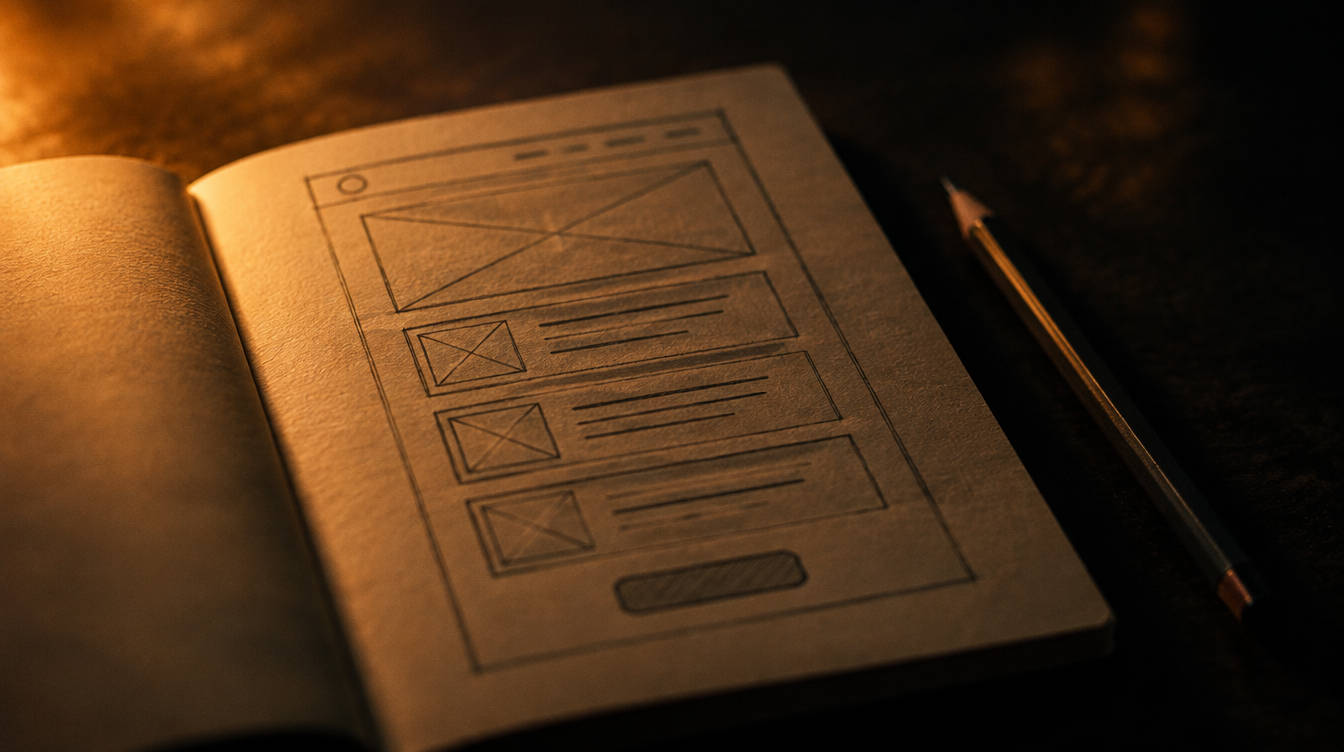
1. The home page
This is the page that answers three questions in about four seconds: what you do, who you do it for, and what to do next. It is not an introduction to your company history.
What belongs on it
- One sentence at the top saying what you actually do, in the words a customer would use
- Three or four things you offer, each linking to its own page
- Two or three pieces of real proof, photos of your work or a short customer quote
- One clear way to get in touch, repeated near the bottom
- Where you work, if that matters for your business
Should the home page explain everything? No. It should make people want one more click. Every section is a door to a deeper page.
Do I need a big photo at the top? You need something that shows the real thing. A genuine photo of your work beats a stock image of a handshake, every time.
2. The page for what you sell
Services or products, depending on your business. This is where most small sites lose money, because they put everything on one page and link to none of it.
What belongs on it
- Each service or product range described in plain language
- What is included and what is not
- Roughly what it costs, or at minimum how pricing works
- What happens after someone gets in touch
Should I list prices? Something, yes. People who cannot find a number assume the worst or leave. A starting price, a range, or an honest explanation of what changes the price all work better than silence.
One page or one per service? One page while you have two or three things. Separate pages once you want each one found on its own, which is also when a search engine starts being able to send you people.
3. The proof page
Call it portfolio, gallery, case studies or recent work. The name matters less than the fact that it exists, because this is the page that turns interest into belief.
What belongs on it
- Photographs of work you genuinely did, not stock images
- A sentence per job saying what the problem was and what you did
- Names and places where you have permission to use them
- A mix, so people recognise their own situation in at least one
What if I am just starting? Then show the work you have, even if it is three jobs. Three real ones beat twenty borrowed images, and a visitor can tell the difference instantly.
4. The about page
Consistently one of the most visited pages on a small business site, and consistently the worst written. People go there to find out whether a human is behind this.
What belongs on it
- A photograph of the actual person or team
- How you got here, in a few honest sentences
- How you work, so people know what to expect
- Anything that makes you the obvious choice for a certain kind of customer
How long should it be? Shorter than you think. Three or four paragraphs. The photo does more work than the words.
5. The contact page
The whole site exists to get people here. It is worth more than five minutes of attention.
What belongs on it
- A short form, name, contact detail, and a message box. Every extra field costs you enquiries
- A second way to reach you for people who hate forms, usually WhatsApp or a phone number
- When you normally reply, so silence does not read as being ignored
- A thank you message that confirms the message actually went somewhere
Does the form need to go anywhere clever? It needs to reach you fast and reliably. A form that quietly fails is worse than no form, because you never find out what you lost. We wrote about that in more detail here.

The four that can wait
These are good pages. They are just not the first five, and building them first is the most common way people stall.
| Page | Add it when |
|---|---|
| Blog | You want to be found for questions people type before they are ready to buy, and you will actually keep writing |
| Pricing page | Your pricing is complex enough that it needs its own explanation |
| FAQ | You notice yourself typing the same answer for the fourth time |
| Booking | Scheduling by message has become the bottleneck, not the sale |
The legal pages, privacy policy, terms, cookies, are not optional, but they are not conversion pages either. Put them in the footer, get them right once, and forget about them.
What it looks like on a real one
Alex runs a plumbing and heating business in Almelo, in the Netherlands. His site has nine service pages, a separate page for each town he covers, a gallery of photographs from jobs he actually did, an FAQ built from the questions he was tired of answering by phone, and a Dutch and English toggle because not everyone who calls him speaks Dutch.
That is well past five pages, and it should be. He got there by starting with the five and adding the rest as each one earned its place. If he had tried to build all fourteen in week one, the site would still be unfinished.
And the other end of the scale
Sometimes one page is the whole answer. A property with a single thing to sell does not need nine pages. It needs one that holds attention long enough for someone to ask for a viewing.

Villa Serayu is a concept property I built to show what that looks like. A drone film that moves as you scroll, four chapters instead of four tabs, the specifications where a buyer expects to find them, and one next step at the end. It is not a real listing and the footer says so. The point is the shape, not the address.
What makes a single page work is the same thing that makes five work. Each section answers one question, in the order someone would actually ask it. The only difference is how many pages you need to get through them.
One page or nine comes down to how many separate things people search for. If you are not sure which side of that line you are on, it is the first thing worked out on the websites and online stores page.
Four mistakes that cost the most
Writing about yourself instead of them. A home page that opens with “we are a passionate team” tells a visitor nothing they can use. Lead with their problem.
Hiding the price completely. You are not protecting your margin, you are filtering out the people who were ready.
Stock photos where proof should be. Everyone has seen that photo before. It reads as “we have nothing of our own to show.”
Building pages nobody asked for. If you cannot say which question a page answers, it is not a page, it is a delay.
Your checklist before you call it finished
- Someone who has never heard of you can say what you do within five seconds of landing
- Every service has somewhere to live and something to click
- There is at least one photo of real work you did
- There is a face on the site somewhere
- A price, a range, or an honest explanation of how pricing works appears somewhere
- The contact form has been tested from a phone that is not yours
- It reads properly on a phone, because most of them will be on one
- Every page answers a question somebody actually asks
Questions people ask
How many pages should a small business website have?
Five to seven covers most service businesses. Eight to twelve once you want to be found separately for several services or areas.
Can I combine the about and contact pages?
You can, and for a one person business it often reads better. Keep contact details visible on every page either way.
Do I need a blog?
Only if you will keep it going. An abandoned blog with two posts from last year does more harm than no blog at all.
Is a one page website enough?
For a single offer with one audience, sometimes. The moment you have two services worth finding separately, one page starts holding you back.
What about an online shop?
Different build. The product pages become the site and payments, shipping and stock all need setting up properly before launch.
How long does five pages take?
Days, not months, when the content is ready. Waiting on photos and text is what stretches a build, not the building.
Where to start
Write the five page names on paper. Under each one, write the single question it answers. If you cannot write the question, you do not need the page yet.
If you would rather not do it yourself, the websites and online stores page sets out what each size includes and what it costs. And if you already have a site but nobody is landing on it, the problem is upstream, which is what video ads and UGC content are for.


